

The sofa won't fit up the stairs. The wardrobe eats the box room whole. And in two years, you'll probably be doing it all again somewhere new. Renting a small space is a furniture problem of its own.
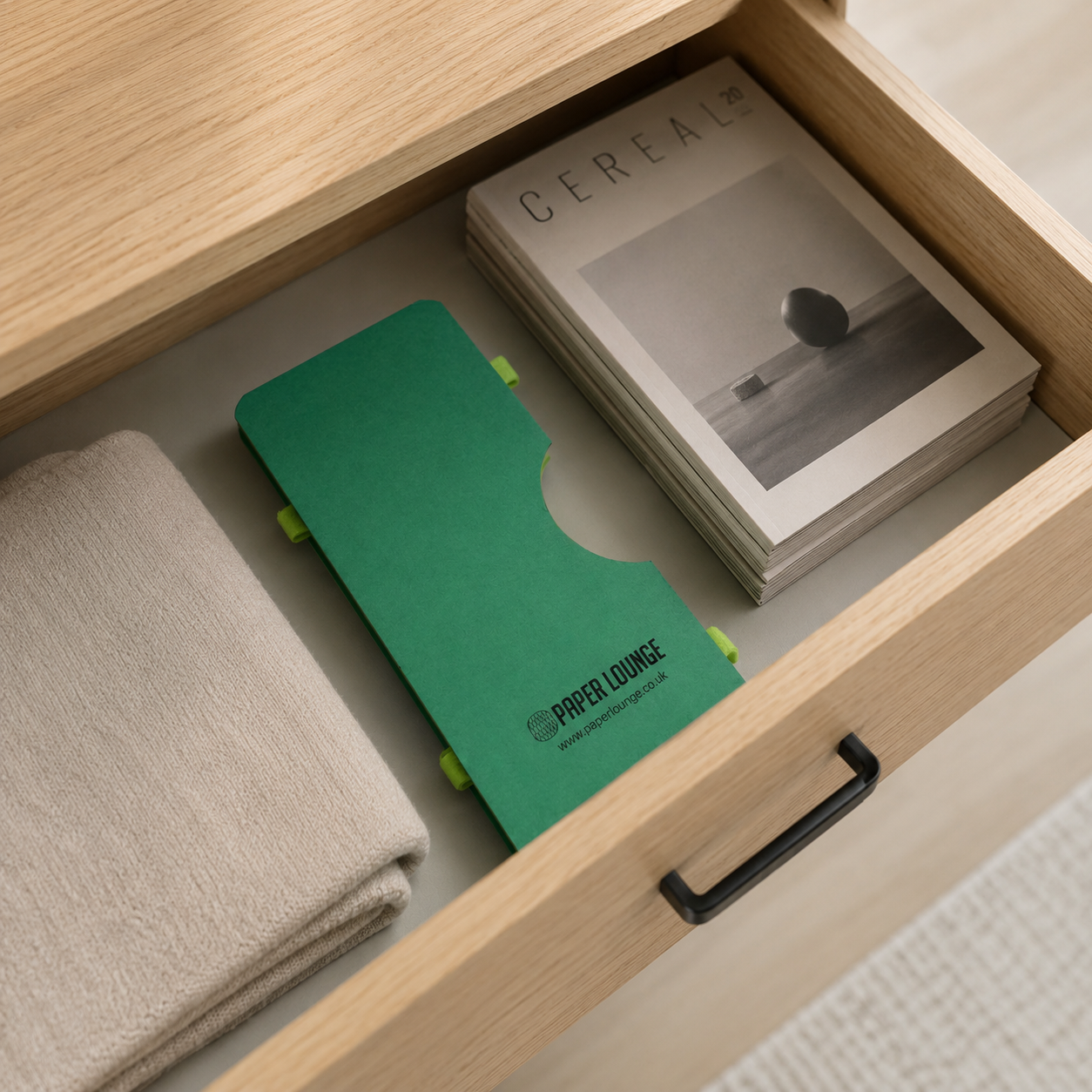
That's where we come in. We're Paper Lounge, and we make the opposite kind of furniture. Foldable Kraft paper pieces that are light enough to carry one-handed, fold flat behind a door, and come with you when the tenancy ends.
So here's our honest guide to furnishing one.
It's not a small flat problem. It's a moving problem.
Here's a number that puts it in perspective. The private rented sector is now 19% of households in England, around 4.7 million homes, and in London it's 28% (English Housing Survey 2024 to 2025). And renters move. The average private renter has been in their current home 4.3 years, but 22% have been there less than a year, and for 16 to 24 year olds it's just 1.3 years before the next move.
So when you're furnishing a small flat, you're not really buying for one room. You're buying for this room, the next one, and the boot of whatever car or van gets you between them. Weight, bulk and how it moves take priority over almost everything else.
The four question test before you buy anything
Forget the showroom photos for a second. A piece earns its place in a small rented flat if it passes four questions:
-
Can you lift it on your own? If it takes two people and a sack truck, it's already a problem in a third floor flat with no lift.
-
Does it fold or pack down? Furniture you can flatten is furniture you can store, and storage is the thing you've got least of.
-
Can you move it without a van? The pieces that come with you are the ones worth buying. The rest you abandon or pay to shift.
-
Does it need fixing to the wall? If it does, it's off the list. You're not drilling a rented wall for a deposit deduction.
Score most flatpack against that and it fails on at least two. Score our foldable Kraft paper furniture against it and, well, that's more or less the brief we built it to.

The honest maths nobody puts on the price tag
Weight and storage are the costs nobody prints on the price tag. Here's where they land.
|
The job |
Conventional flatpack |
Foldable paper furniture |
|---|---|---|
|
Extra seating for guests |
Stacking chairs that need a cupboard you do not have, or a sofa bed past 40kg |
Stools that fold to about the depth of a hardback book and slide behind a door |
|
Weight to carry |
Solid wood or MDF, often a two person lift |
Light enough to carry one handed, up the stairs in a single trip |
|
When you move |
Dismantle, rebuild, lose half the fixings, or pay a removal firm |
Fold flat, stack in the car, set up in seconds at the other end |
|
End of the tenancy |
Heavy, hard to resell, often binned |
Fully recyclable at kerbside paper collection |
None of this means paper furniture replaces everything you own. We'd never claim that. But for the jobs small flats actually struggle with, guest seating, a table that isn't always needed, zoning an open plan studio, it solves them in a way a slab of MDF can't.
A fair question at this point: is light furniture actually strong enough to use? Short version, yes. Every Paper Lounge piece is rated to hold 100kg, more than the average UK adult, thanks to a honeycomb paper core borrowed from aerospace panels. We pulled that claim properly apart in is paper furniture actually strong, if you'd rather see the engineering than take our word for it.
What actually works, job by job
Seating that disappears when the guests do
The classic small flat bind: you want to seat four or six when people come over, but you don't want four spare chairs cluttering the place the other 360 days a year. Our foldable stools and benches are the fix. They open in seconds, hold a grown adult without complaint, and fold flat to store on top of a wardrobe or behind the sofa. When the dinner's over, they vanish.
A table that vanishes after dinner
A permanent table in a small flat eats floor space you can't spare the rest of the time. A folding round paper table works as a coffee table most days, a casual dinner spot for two at the weekend, and a desk for the evenings when you work late. Then it folds flat behind a door when you're done.
Split a studio without building a wall
The hardest thing about a studio is that it's one room pretending to be three. You can't put up a stud wall in a rental. A concertina room divider does the job without a single screw: pull it out to screen the bed from the sofa, fold it away when you want the space open. Think of it as the renter's version of a wall.
Surfaces that pull double duty
Our display pillars and footstools earn their keep as side tables, plant stands, bedside perches and bedroom benches, all without the weight of timber. In a small flat, a piece that does two jobs beats two that each do one.
Colour without touching the walls
Painting isn't an option in a rental. The furniture becomes the way to add personality without risking the deposit. Our stools, benches and tables come in a range of colours, from clean neutrals through to bold reds, yellows and blues, plus a recycled natural finish. Add felt, plastic or faux leather tops for a change of texture or a wipe-clean surface. They also protect the piece underneath and extend its life.
Why space saving is giving way to foldable
Search clever furniture for small spaces and you'll notice the language changing. For years the answer was space saving units: things that were simply smaller. Lately the interest has swung towards furniture that folds, stacks and travels. UK searches for clever small space furniture have roughly doubled over the past year, and foldable furniture is climbing with them.
It makes sense to us. Smaller is a static fix. Foldable is a flexible one, and flexibility is exactly what you need in a space that keeps changing. The top result for small flat furniture ideas, House and Garden, leads on folding chairs and bistro tables. IKEA's own small space guide pushes sliding or folding options. The mainstream is finally catching up with how renters actually live.

What to leave on the shelf
A few things that look sensible and aren't, once you're the one carrying them:
-
Anything that needs wall fixing. Floating shelves and wall mounted desks are a deposit risk and a faff to make good when you leave.
-
Heavy flatpack you'll only build well once. The second build, in the next flat, is where the fixings go missing and the panels chip.
-
Single purpose bulk. A drinks trolley, a dedicated console, an armchair nobody sits in. Floor space in a small flat is too dear for furniture that does one thing badly.
-
Anything you can't picture in the next flat. If it only works in this exact corner, it's a sunk cost waiting to happen.
The furniture you won't bin at the next move
There's a quieter cost to renting that nobody budgets for: the stuff thrown out at each move. The UK already bins around 670,000 tonnes of furniture a year, and only a fraction of it gets recycled. A lot of that is flatpack that didn't survive the dismantle, or pieces too heavy and too cheap to be worth shifting. Furniture that folds flat and travels with you sidesteps most of it. And when one of our pieces does reach the end of its life, it goes out with the recycled paper, not into a skip.
The short version
A small flat isn't really a design problem. It's a logistics one. Limited floor space, walls you can't touch, and a move on the horizon you can't fully see yet. The furniture that works is the furniture that bends to all three: light to carry, quick to fold, easy to store, ready to come with you. Start with the pieces that fold away when you're done with them, have a browse through our home range, and furnish for the flat you're in now and the one you'll be in next.
Questions we get asked a lot
Is lightweight furniture sturdy enough for regular use?
Yes. Our pieces are rated to 100kg each, more than the average adult, using a honeycomb paper core. They're built for daily indoor use, not just the occasional event.
What furniture works best in a rented flat where you can't drill the walls?
Free standing, foldable pieces. Stools, benches, folding tables and a concertina room divider give you seating, surfaces and zoning without a single wall fixing.
How do you furnish a studio without it feeling cramped?
Use furniture that isn't always there. Fold seating and tables away when you're not using them, and zone the space with a movable divider rather than fixed furniture.
How do you store spare furniture in a small flat?
Buy pieces that fold flat. A folded stool or bench is about the depth of a hardback book, so it slides behind a door, under the bed, or on top of a wardrobe.
Indoor use only. Free UK delivery. 30 day returns on unused items.
Share:
The Real Environmental Cost of Event Furniture and the Alternatives Worth Knowing
Summer Hosting and the Housewarming Gift That Actually Gets Used