

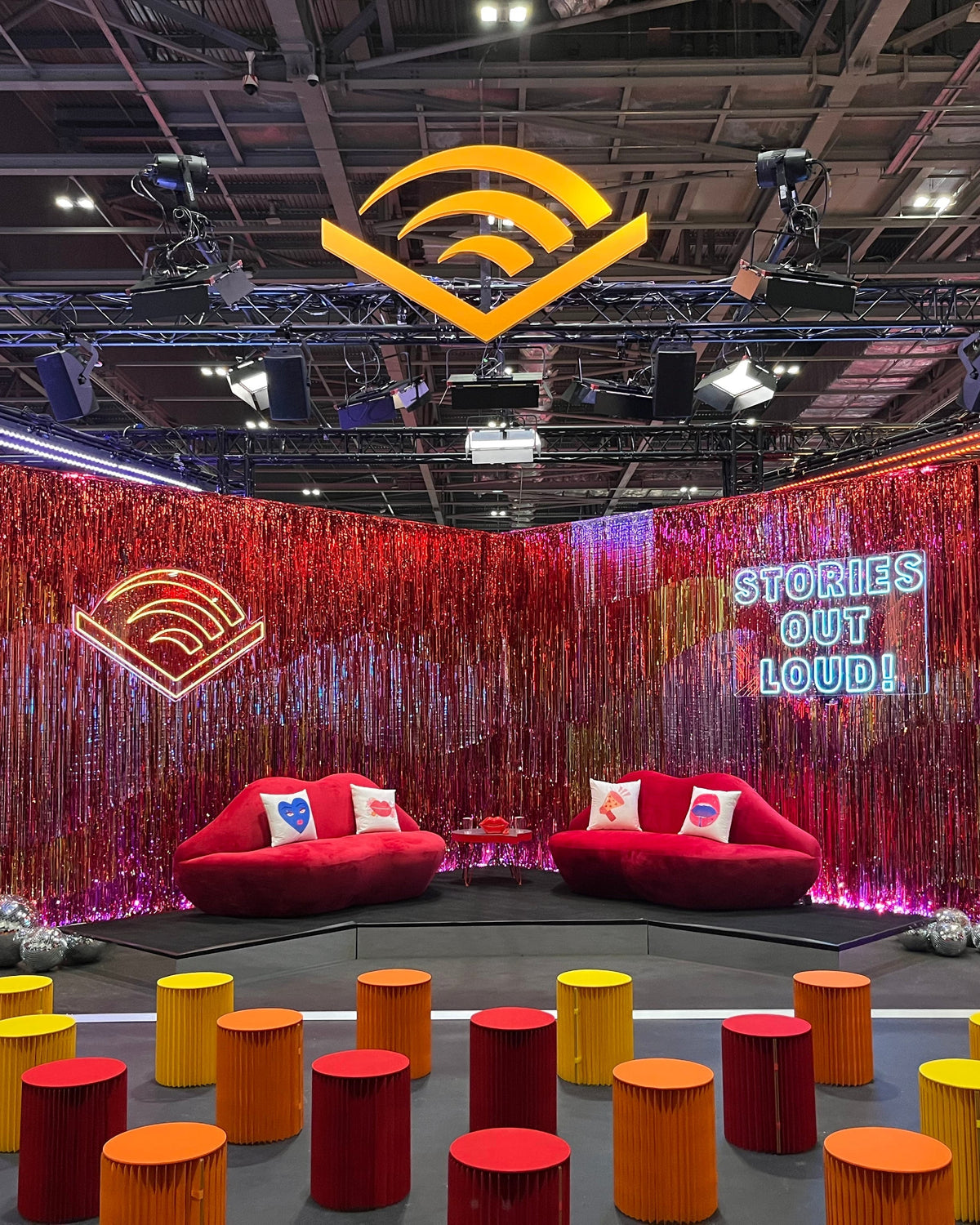
The skip behind the exhibition hall tells the real story. By breakdown night it's overflowing with snapped timber from a custom stand that will never go up again, polypropylene chairs with a cracked leg, foam, offcuts, the lot. Nobody photographs that part. The stand looked sharp for 48 hours, then it became waste.
The numbers at a glance
|
The figure |
What it means |
|
Around 670,000 tonnes of furniture binned in the UK each year |
Only about 17% of it is recycled. The rest is landfill or incineration. |
|
The UK exhibition industry alone |
An estimated 100,000 tonnes of waste a year, most of it single-use stand builds. |
|
A custom timber stand |
Typically lasts one or two shows, then it is scrapped. |
|
A Paper Lounge stool |
Rated to 100kg per seat position, folds flat, recycles at kerbside, designed for repeat use. |
What actually happens to event furniture after the event
Most event furniture is built for a moment and gone by the weekend. WRAP puts UK furniture waste at roughly 670,000 tonnes a year, about 42% of all bulky waste, and only around 17% of it gets recycled. The rest goes to landfill or the incinerator.
Events make that worse, not better, because so much of what fills a hall is designed to be temporary. The UK exhibition industry is estimated to throw out about 100,000 tonnes of waste a year, the bulk of it single-use timber stands that get built once, stripped down and skipped. A single large trade show can produce as much waste as a small town does in a week.
The seating is part of that. Cheap polypropylene chairs crack and go to landfill. Bespoke pieces get built for one launch and binned. Even the better stuff often ends up in a skip, because moving it, storing it or repairing it costs more than replacing it.

“But we hire it, so it is already sustainable”
This is the line many furniture hire companies lead with, and it is half right. Hiring beats buying a hundred chairs you use once. No argument there.
But hire is not free of footprint, and the trade is quiet about the bits that are not. Every hired chair arrives by van and leaves by van, often on separate trips. Between events it gets washed, sometimes with chemicals, stored in a powered warehouse, repaired, reupholstered, and eventually scrapped when it stops looking hireable. You are not dodging the environmental cost. You are renting a share of someone else’s, and paying the transport bill twice, there and back, every single time.
The honest version is this. Hire is greener than single-use, and worse than owning something you genuinely reuse yourself.
The materials, ranked by what they actually cost
Not all event furniture is equal. Here is roughly how the common options stack up once you account for transport, reuse and what happens at the end of the line.
|
Material |
Lifespan |
Transport |
End of life |
The verdict |
|
Custom timber stand build |
One or two shows |
Heavy bespoke haulage |
Mostly landfill or burnt |
Worst offender, avoid for repeat events |
|
Polypropylene chairs |
A few uses before cracking |
Bulky, stackable |
Landfill, rarely recycled |
Cheap upfront, expensive to the planet |
|
Hired metal or Chiavari seating |
Years, across many clients |
Van there and back, every event |
Reused, then scrapped |
Beats single-use, transport heavy |
|
Engineered Kraft paper honeycomb |
Designed for repeat use, yours to keep |
Flat-packs for compact transport |
Recyclable at kerbside paper collection |
Lowest footprint when you own and reuse it |
Where Kraft paper honeycomb fits, and where it does not
Our furniture is built from layered Kraft paper formed into a hexagonal honeycomb core, the same structure aerospace engineers use in aircraft panels because it gives the most strength for the least material. A stool holds 100kg. A bench takes up to 350kg. And the whole thing opens out in seconds, then folds back to roughly the depth of a hardback book.
There is no plastic core, no resin, no foam. At the end of its life it goes out with the kerbside paper recycling. The recycled collection takes that further again, made from recycled stock to begin with.
Now the honest limits. It is indoor only. Kraft paper handles normal indoor humidity fine, but it is not built for rain, wet grass or a leaking marquee. A spill is fine if you wipe it up immediately with a dry cloth. Keep it dry, treat it as furniture rather than gym equipment, and it will outlast most flat-pack alternatives. Soak it and you have ruined it. So for anything outdoors you plan separately, and we would rather say so, than sell you something that doesn't live up to expectations.

The honest maths of owning instead of hiring
The maths shifts for anyone who runs events more than once a year. Buy a set of stools and tables once and the cost per event drops with every use. An exhibitor doing six shows a year pays delivery and collection on hired furniture six times over. They organise it six times over too: quotes, bookings, delivery windows, damage waivers, and a collection slot squeezed into the end of the show. Owned flat-pack furniture rides in the boot with the rest of the stand kit, sets up without a crew, and goes home the same way. By the second year, the per-event cost of owning is a fraction of hiring, and there's no van idling outside at midnight.
It scales down too. A pop-up that runs for a fortnight, a roadshow visiting five cities, a stand you take to the same annual show. All of them benefit from furniture you carry yourself and reuse. The display solutions and events solutions pages walk through how the pieces tend to get used for exhibitions, launches and corporate events.
How to cut the footprint of your next event
None of this means scrapping everything and starting over. A few practical moves make the biggest difference.
-
Stop buying single-use. If a chair or table is destined for the skip after one event, that is the first thing to change.
-
Favour reuse over hire when you run repeat events. Owning something you use six times a year almost always beats renting it six times.
-
Check the end of life before you buy. Can it be recycled kerbside, or does it need specialist disposal? Kraft paper goes out with the paper. Most composites do not.
-
Cut the transport. Furniture that flat-packs into a car removes the delivery and collection legs entirely.
-
Look at the whole stand, not just the seating. The timber build is usually the single biggest source of waste, so reusable and flat-pack elements there move the needle most.
If you have ever wondered whether paper furniture is actually strong enough to trust at a busy event, that one has its own answer.
Temporary does not have to mean disposable. That is the bit the events world has been slow to act on, even as everything else has gone greener. Furniture can look good for two days and then have a life beyond them, folded flat in a cupboard, waiting for the next show.
Share:
Indoor Wedding Seating That Looks Great and Packs Flat
Lightweight Furniture for Small Flats, Studios and Rentals